

Surging “Education” Spending Squeezing Homeowners Out
So-called "education" is raising property taxes, forcing citizens—especially those on fixed incomes—to sell homes. The indoctrination scheme isn't just harming youth; it's destroying private property.

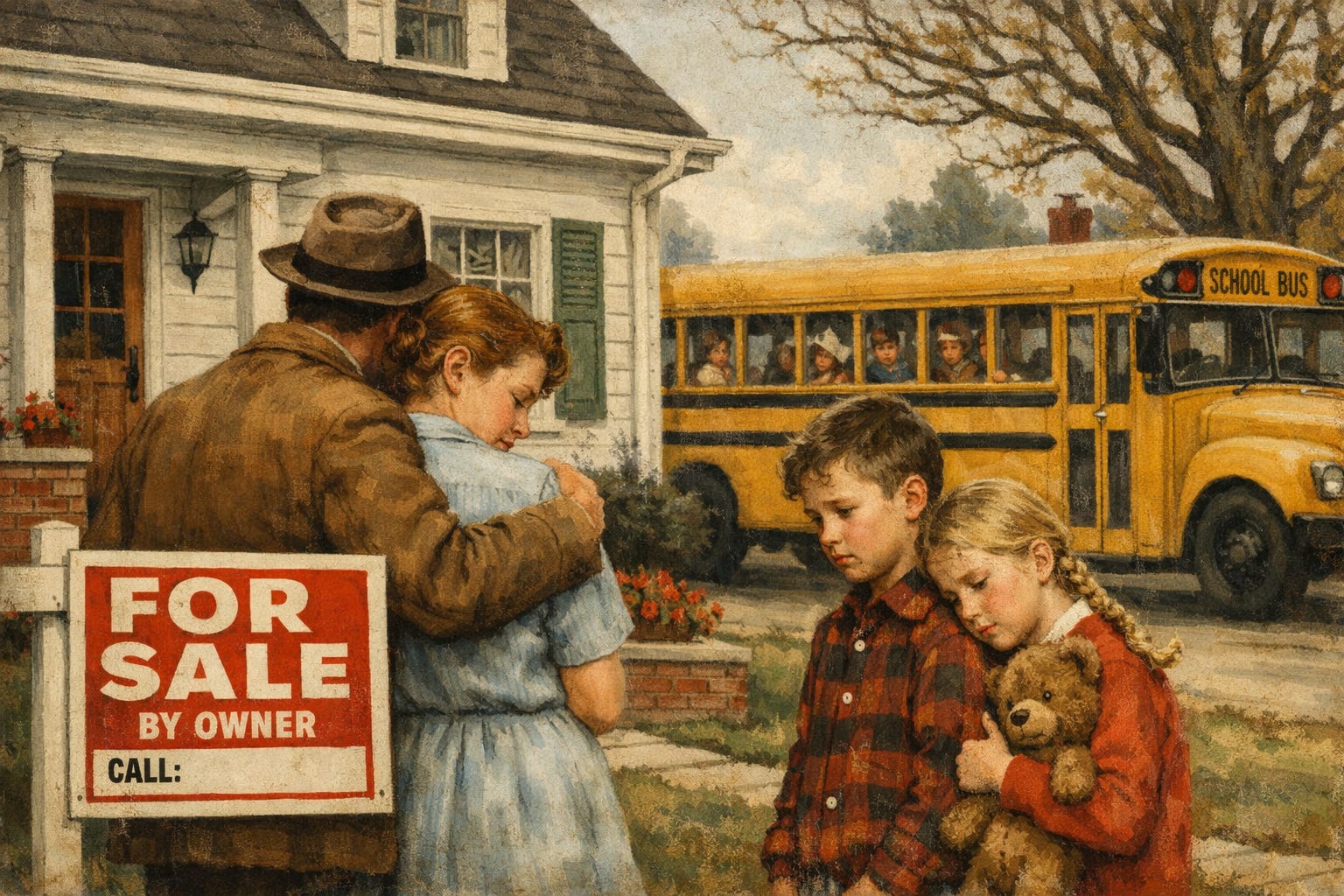
So-called “education” is raising property taxes, forcing citizens—especially those on fixed incomes—to sell homes. The indoctrination scheme isn’t just harming youth; it’s destroying private property.
With government spending on “public education” ballooning, surging property tax rates to fund it in some states are forcing homeowners to cut back on living expenses or even to sell their homes — especially those on fixed incomes such as retirees. Vermont is ground zero but it is hardly alone.
Government “education” is by far the largest driver of increased property taxes each year. With the whole national system costing over $1 trillion per year, almost half of that in most states is coming from local property taxes. And as costs of government “education” skyrocket, so do property taxes.
In the Green Mountain State, another wave of property-tax increases is cresting, threatening to wash away the dreams and financial security of thousands of homeowners. According to the Vermont Tax Department, property taxes are projected to jump by an astounding 12 percent in 2026, based on preliminary school budgets from two-thirds of local districts.
This massive tax hike follows a stunning 41 percent increase over just five years, according to local officials and analysts, and it isn’t occurring in a vacuum.
For many long-term residents, the numbers are existential threats. The median Vermont homeowner already pays one of the heaviest burdens in the nation. In some counties, median property taxes are as high as $6,000 per year already.
That means the expected 12 percent increase will add almost $750 to these homeowners. And if they cannot find the additional funds in their budget to cover the huge tax hike, they risk losing their homes.
The reason for these relentless tax hikes is not inflation or a sudden explosion in local need for government services. Rather, it is surging public-education spending that continues to rapidly outpace economic growth and student enrollment.
And as the cost-per-pupil explodes, the quality of “education” being provided continues to plummet. Indeed, nationwide, less than one in three victims of government schools is even considered “proficient” in any core subject.
Leading globalist organizations such as the World Economic Forum have publicly outlined a vision in which, by 2030, “you will own nothing.” Soaring property taxes to fund government indoctrination masquerading as education may help make that a reality for many struggling taxpayers.
Jack McPherrin, senior policy analyst and research fellow at The Heartland Institute, told The Newman Report that this crisis has a real human toll. “A projected 12 percent increase in Vermonters’ property taxes—bringing the total to 41 percent over five years—is simply unsustainable for working families, first-time buyers, and seniors on fixed incomes,” he said.
“Vermont is spending more to educate fewer students with deteriorating results, and the burden is pushed onto homeowners who have no ability to adjust or opt out,” added McPherrin. “Property taxes at these levels function like a second mortgage and force families to choose between staying in their homes or cutting back elsewhere.”
McPherrin went further, issuing a warning about the broader implications if this policy disaster is not addressed. “Reform in Vermont must begin by cutting spending, confronting the system’s structural bloat, and holding schools accountable for measurable results rather than treating private property as a convenient ATM for policymakers,” he said.
The high-profile researcher offered a chilling vision of the future if policymakers do not act. “When ordinary families can no longer afford to stay in their homes, ownership often shifts to institutional landlords, investment groups, and financial entities that operate in close coordination with regulators and public agencies and have little connection to local communities.”
Among other problems, this dynamic would centralize control over housing decisions in the hands of interests aligned with the state rather than those who live there, he added.
“The result is a shrinking class of property owners and a growing population priced into permanent tenancy,” continued McPherrin. “Taken together with restrictive regulations, limited supply, and other barriers, tax hikes of this magnitude accelerate the broader national affordability crisis that is turning America into a nation of renters, in which first-time buyers are effectively locked out of owning a home and longtime residents struggle to keep the ones they already earned.”
Obviously, the fundamental problem isn’t just taxes—it’s how public-“education” systems have evolved into sprawling, bureaucratic leviathans whose costs continue to soar with little accountability and atrocious outcomes. In short, the government schools have become a threat not just to the children forced into them, but to the taxpayers forced to fund them.
Across the United States, local property taxes remain the most significant revenue source for public education, responsible for more than a third of annual K–12 funding. Indeed, data show that local property taxes, state aid, and federal dollars combine to spend roughly $17,000 per public school student annually, with local revenues contributing roughly $7,500 per pupil.
Because so much of the cost of public education is financed through local levies, every uptick in school spending directly translates into pressure on property tax bills. In Vermont, where state law ties school budgets tightly to local property tax rates, the phenomenon is especially acute.
The state’s recent decision to let last year’s tax “buydown” expire — effectively removing a cushion that had artificially suppressed rates — means that the full brunt of increased education budgets will now be laid on homeowners. Many will not be able to bear the burden.
David Austin, a sixth-generation Vermonter who has been serving in local government for nearly 30 years, put a personal face on the crisis. “The recent announcement of a projected 12 percent property tax increase saddens and angers me,” Austin told The Newman Report when asked about the crisis.
“I know people right here in the small city that I grew up in who struggle greatly to afford to keep the house and property that they cherish,” he said. “Some of them are not able to do it, and eventually they will lose their property in a tax sale to cover the debt.”
“Many of our leaders, and unfortunately too many of this state’s residents, will continue to prioritize wants over needs, tolerate inefficiency and waste—and will just look the other way while their neighbors suffer and ultimately lose their homes,” added Austin.
His testimony echoes what economists and housing advocates have long warned: when property taxes rise dramatically, especially due to education spending that homeowners cannot control, the result is lost homes, eroded community stability, and an increasingly untenable climate for families hoping to build generational wealth through homeownership.
Even top officials in Vermont are starting to acknowledge the enormity of the problem. Education Secretary Zoie Saunders put it this way: “We are contending with two enormous challenges: property taxes that families cannot afford and an education system that local communities cannot sustain.”
State Tax Commissioner Bill Shouldice sounded the alarm as well. “Fifteen thousand less kids in our school system and the cost increase over that time in the 20-year window is up almost a billion dollars,” he was quoted as saying in media reports.
Governor Phil Scott, an extremely liberal Republican, admitted this situation could not continue indefinitely. “Taxes have gone up over the last 5-10 years about 40% and it’s just plain unsustainable,” he said.
Even the Democrat House Speaker Jill Krowinski admitted that there is a problem. “Taking no action is not an option.”
While Vermont’s situation may be one of the most acute examples, it is far from unique. Across the United States, local governments face the same structural dynamic: to maintain and expand public-education budgets (and pay the enormous pension obligations they incurred for that “education”), they rely on property taxes that homeowners cannot avoid.
According to federal education finance data, total public school revenues rose from $819 billion to $954 billion between 2010–11 and 2020–21, a 16 percent increase over the decade. Much of this growth has occurred at the local and state levels, even as federal support as a share of total education funding has declined to around 10 percent for most states.
Nationally, nearly 43 percent of public education funding stems from local taxes, meaning budget increases have a direct connection to property tax pressures on homeowners.
In states like New York, even efforts to increase state aid to schools—such as a record $37 billion education budget that included a $270 million state aid boost for Long Island—have failed to prevent property taxes from remaining among the highest in the country, largely because school spending still drives local tax obligations.
In Connecticut, municipalities have seen significant property tax increases tied directly to school budget votes approved by local referendums, too. Similar patterns appear in other regions, where school boards and education unions resist meaningful spending restraints while insisting on ever-more robust “programs.” It’s all for the “children,” of course.
The core of the problem lies in the model itself. Unlike most modern “public services,” U.S. public education places an enormous share of its funding burden on local property taxes. This grants local school districts incredible leverage over homeowners—leverage that is rarely checked by tax caps, voter opposition, or fiscal restraint.
When districts raise budgets to cover rising personnel costs (which make up the majority of school expenditures, including salaries, benefits, and pensions), teacher healthcare costs, special education programs, and expanded curriculum mandates, property tax bills automatically follow in most places.
While some states such as Florida have some protections to protect homeowners from exorbitant increases in taxes, in many states these hikes are virtually unrestrained. Home owners and renters who must compensate their landlords for taxes end up paying the price.
The schools districts have little reason to limit spending. Even setting aside the broader problems with the idea of government providing “education,” this financing architecture creates perverse incentives that are destroying many property owners and local communities. Local taxpayers are trapped.
When property taxes become unaffordable, as is happening in Vermont and so many other places, the consequences are serious. Rising tax obligations increase monthly carrying costs on homes, forcing families to sell. In extreme cases, homeowners lose property in tax sales—a tragic outcome increasingly reported in Vermont’s small cities.
As a result of that, home ownership—once a key element of the middle class — becomes difficult, and more people are forced to rent. With high property taxes baked into the cost of homeownership, younger families find it increasingly difficult to enter the market. The poor renters end up paying big institutions to cover the taxes via increased rent.
Despite growing awareness of this increasingly severe crisis, meaningful reform remains elusive. In Vermont, legislators are returning to the Capitol in Montpelier with property taxes and education reform at the top of the agenda, but consensus on solutions is scarce. In fact, tax-and-spend Democrats show little appetite for real solutions.
The question facing policymakers is simple: will they continue to inflate education budgets —deepening property-tax burdens on families who can least afford them—or will they confront the drivers of this spending growth? Unless that question is answered with concrete action, property taxes will continue to climb, homes will be lost, and the promise of American homeownership will slip further out of reach for ordinary families.
Remember: All of this money is being used to pay for a supposed “education” system that is systematically dumbing down, indoctrinating, and sexualizing a generation of Americans. As multiple states such as Florida, Wyoming, South Dakota, and beyond seriously consider abolishing property taxes, it is time to think bigger.
States like Vermont and the nation more broadly are facing a systemic problem. The government education system is now an existential threat not just to children and abstract ideas such as civilization and liberty, but to taxpayers’ budgets, livelihoods, and even property ownership. It is time for radical change.

All by design. Banks can’t make money off we homeowners who worked 40 to 50 years to be debt free. Property taxes are just straight up UN - American.
Are we getting $1 trillion in decent returns on that education spending? Hardly. Id' say about $1.57 for every $10 spent. What are we getting in return for paying taxes? Things like thousands of Salamis getting filthy rich...just for starters.
The river of taxpayer money soiled by theft and grifting is likely 50% for every dollar collected. The deficits are what we pay for the theft and grifting by the DC Cesspool and state governments, also in on the act.